

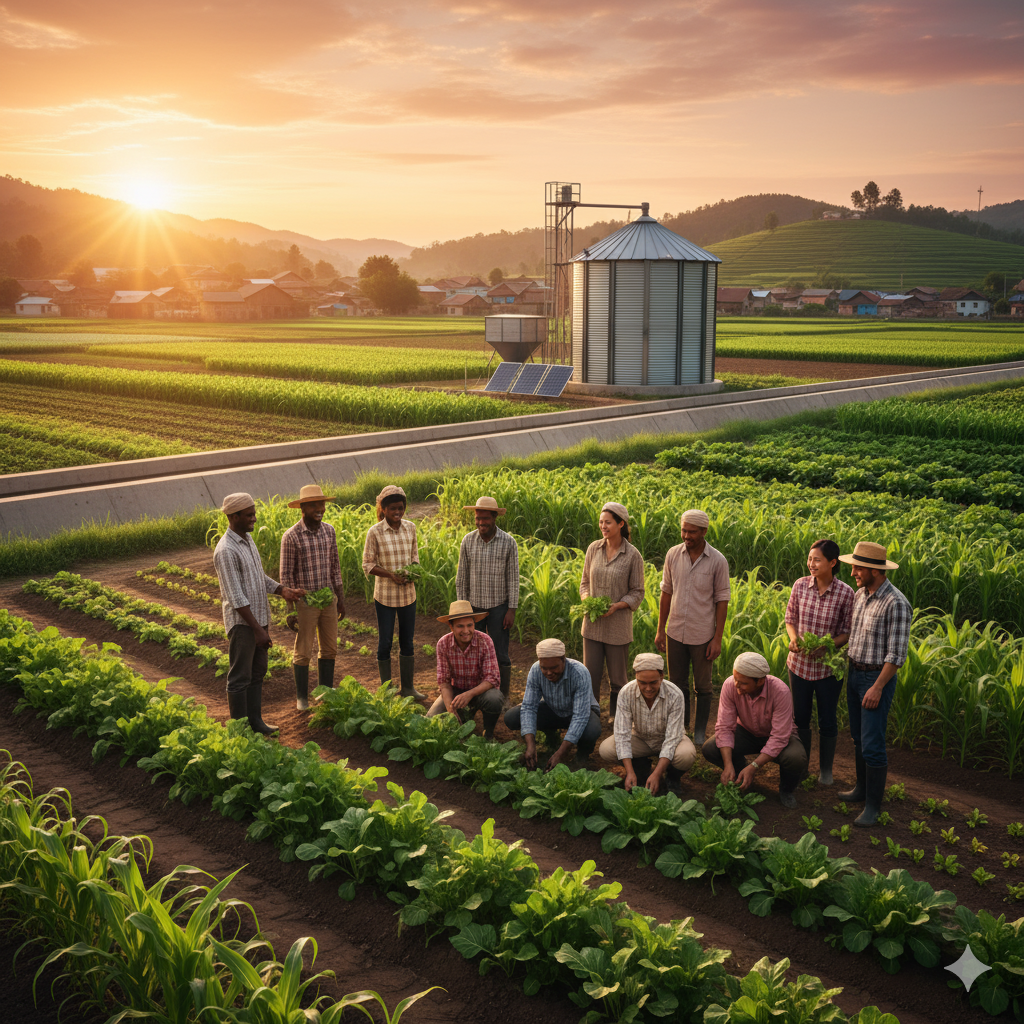
Food security remains a significant challenge across the African continent, a complex issue driven by climate change, conflict, and market volatility. While the continent is rich in arable land, reliance on rain-fed agriculture and inadequate infrastructure often leads to post-harvest losses and inconsistent yields. Enhancing food security requires a multi-faceted approach, focusing on sustainable practices like conservation agriculture, investing in resilient seed varieties, and expanding access to timely weather data and modern irrigation technology for farmers.
Furthermore, strengthening local value chains is essential to ensure food availability and affordability for all populations. This means investing in local storage facilities, improving rural road networks to connect farms to markets, and promoting community-managed food reserves. By linking production directly to local consumption and reducing reliance on costly imports, African nations can build more resilient, self-sustaining food systems that protect citizens from global shocks and ensure nutritious food is accessible year-round.